Plastics Moulding
From concept to execution — we design concepts, develop prototypes and deliver final products. Thanks to our in-house injection moulding plant, tool shop, laboratory and development team, we manage the entire production process under one roof.

Product Development
Concept, prototype and final product
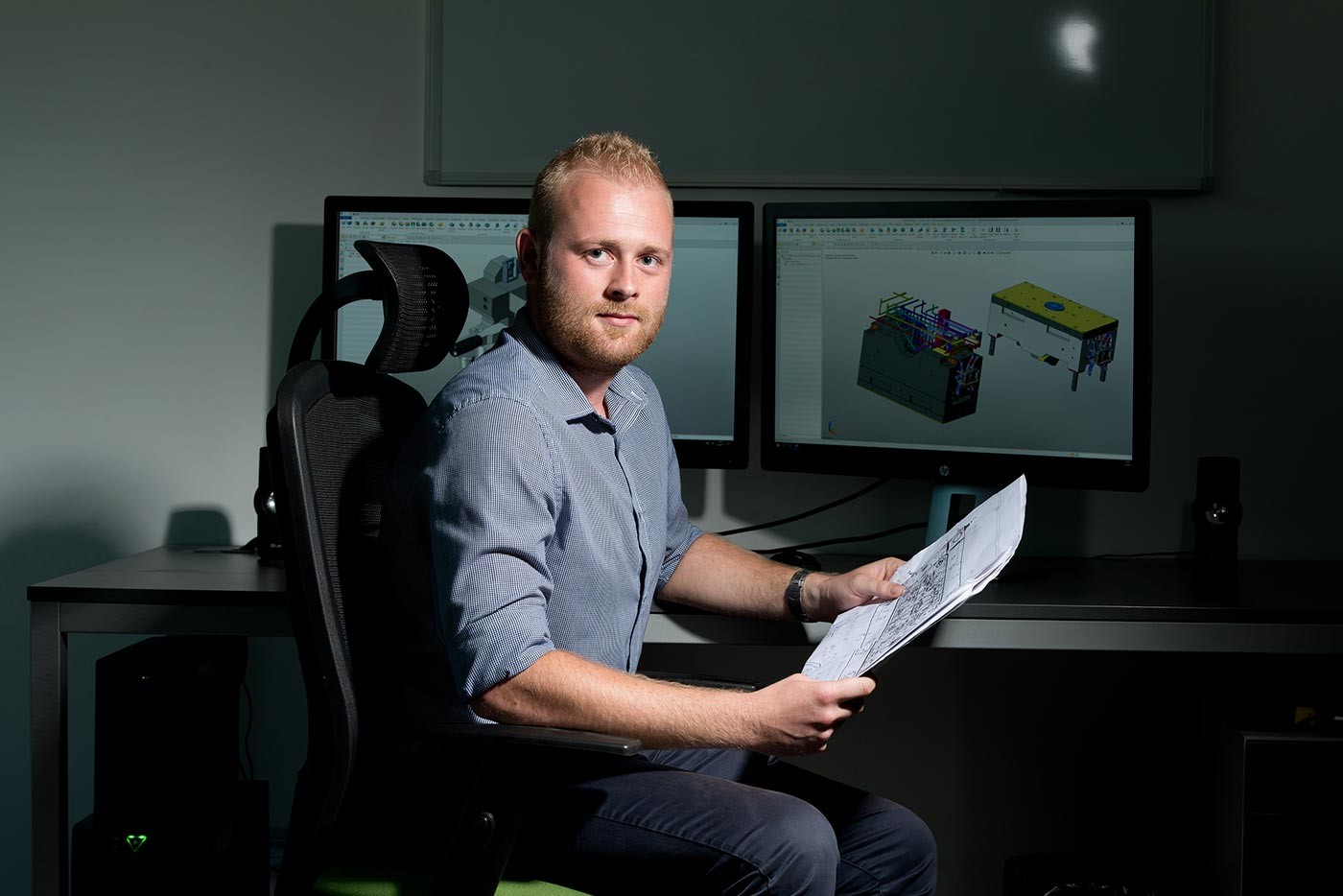
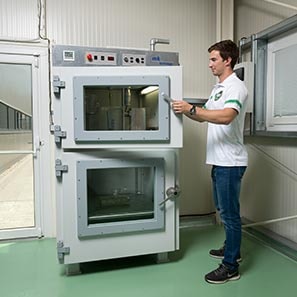
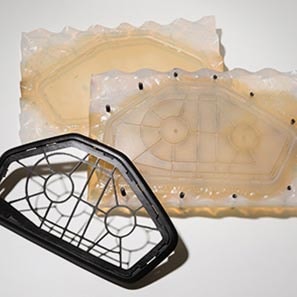
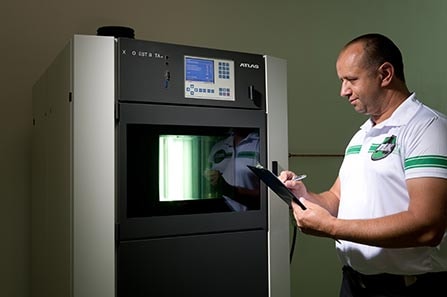
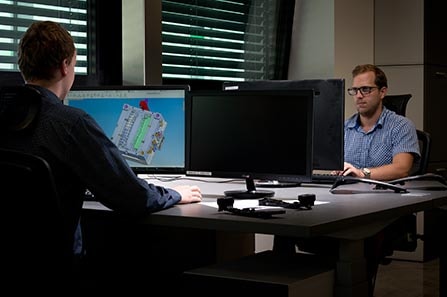
As part of our customer projects we offer product development services. In addition to CAD systems Catia V5, Solidworks 2017 and NX, we have extensive experience in the design of plastic parts, prototyping via 3D printing and silicone mould casting, production of plastic parts from aluminium moulds and subsequent validation and testing of prototypes, the results of which we incorporate into the next design phase. Key validation tests performed in our laboratory include climate cycling, solar radiation and flammability tests.
We recommend verifying the key product parameters by calculations and simulations even before prototyping begins — the insights gained really pay off. Depending on the scope of the project we also cooperate with renowned partners whose quality we have verified through long-term collaboration.
We always strive to develop a product that is functional, technologically manufacturable and economically viable.
Tool Design & Manufacturing
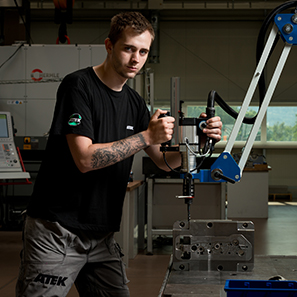
Newly built tool shop
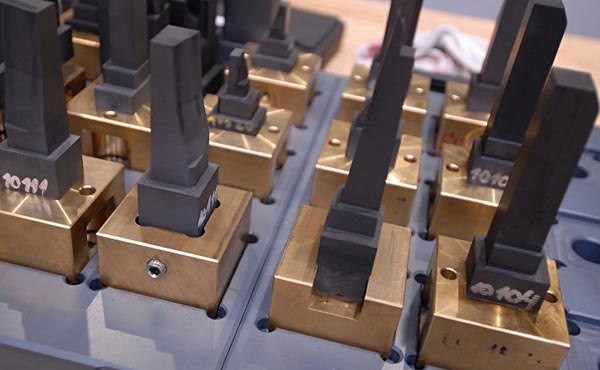
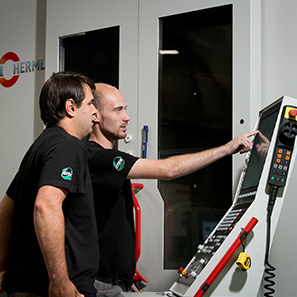
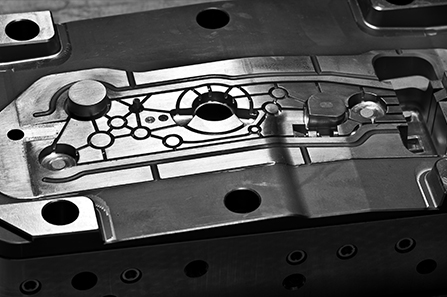
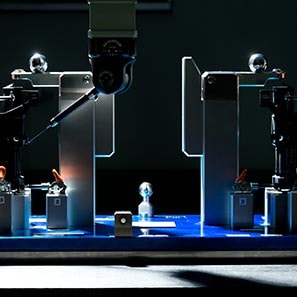
We assess the manufacturability of plastic parts, design the optimum production process and then design the injection mould or various measuring and inspection fixtures.
We design and manufacture moulds with a focus on trouble-free operation in series production, long service life and easy maintenance — all while meeting deadlines and cost targets.
We have experience designing a wide range of injection moulds for plastic parts for both technical and decorative applications.
For these activities we use CAD software Catia V5, Solidworks 2017 and ZW3D. We can also process data from NX. For more complex applications we simulate and analyse mould filling to identify risks early and define the optimal mould concept.
Injection Moulding
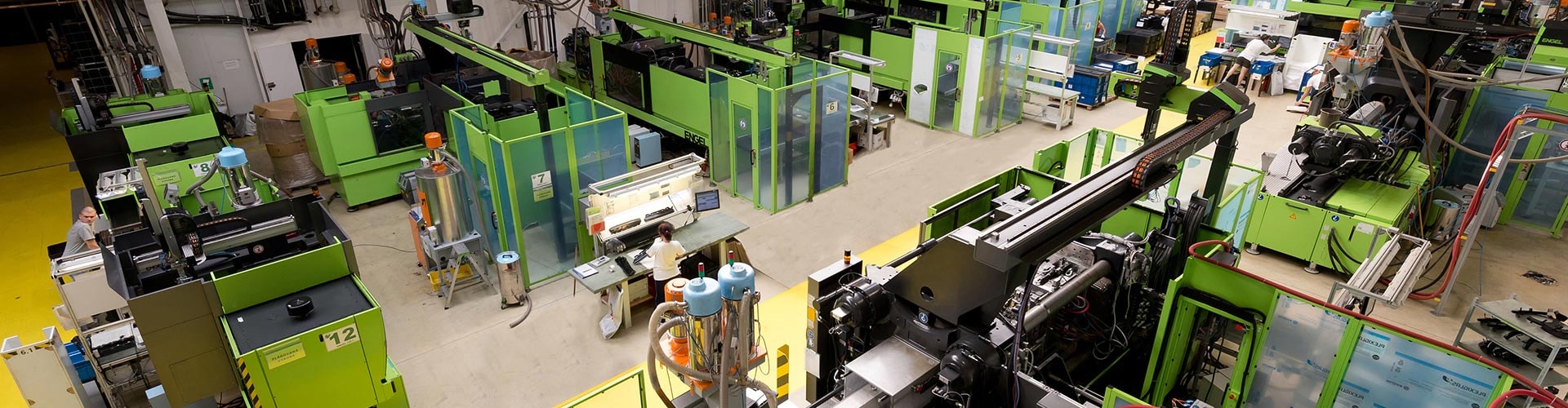
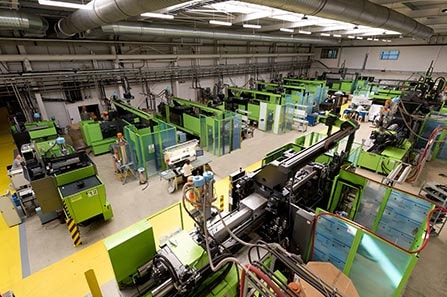
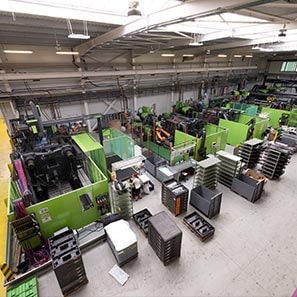
More than 47 ENGEL presses and 8 more on the way.
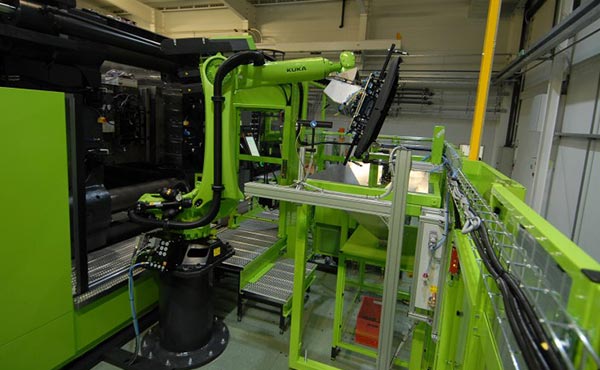
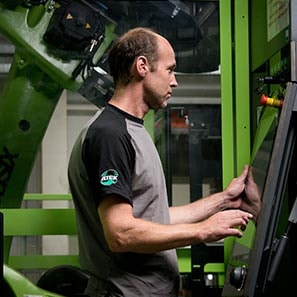
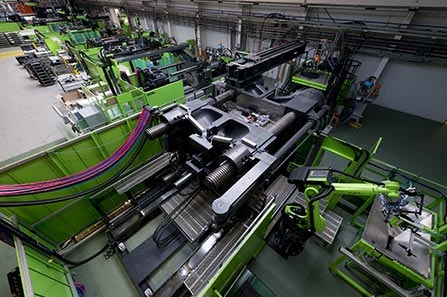
Plastic parts are produced across 4 production halls on state-of-the-art ENGEL injection moulding machines. Their clamping force ranges from 50 to 3,200 tonnes, with the vast majority of machines offering a clamping force of 900 tonnes and above. The machines are equipped with linear robots, now predominantly six-axis, which handle not only part removal but also downstream operations (runner removal, flash trimming). Conveyor belts ensure optimal handling and tempering of parts. Granulate is stored in stainless steel silos; its conveying and drying is centrally controlled by movis software.
Thanks to cutting-edge technologies we ensure a stable, high-quality process and meet the demanding quality requirements for automotive interior and exterior parts.
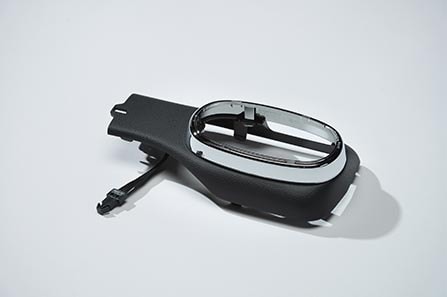
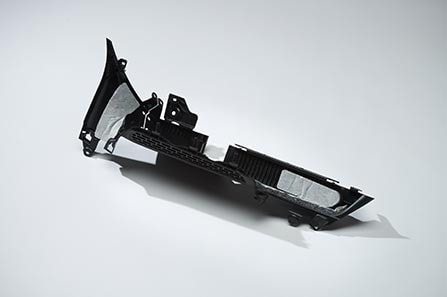
We manufacture a wide portfolio of parts — from components weighing just a few grams to parts of 10–15 kg. We produce both visible and non-visible parts: interior components (sills, pillars, centre console parts, cockpit components, boot components) as well as exterior parts (front and rear bumper parts or tailgate spoilers). Our products are made from plastic, plastic/rubber, plastic/fabric and plastic/expanded materials.
We master two-component injection moulding as well as nitrogen gas-assisted moulding, using rotary tables, part transfer and direct or lateral injection.
Assembly
assembly of plastic parts and supporting operations
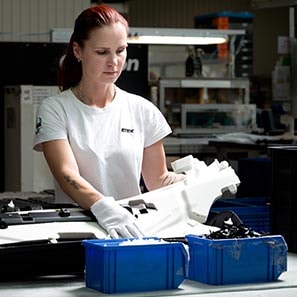
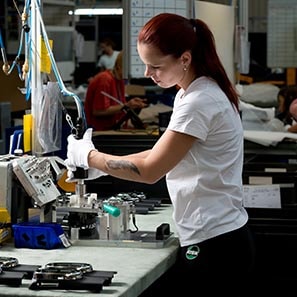
Using sophisticated assembly fixtures we assemble complex units directly at the press or via fully automated lines.
Assembly includes automated inspection of all components entering the assembly via cameras and detection sensors. Everything is controlled by the PHARIS / HELIOS information system, which also collects production data and evaluates SMED, efficiency, productivity and scrap rate (OEE).
In addition to assembly we provide welding, laser operations, part foaming (an alternative to two-component moulding) and pad printing. For some products we arrange external painting and chrome plating.
Quality Control & Process Management
The automotive industry places extreme demands on quality, process stability, risk management and systematic prevention of defects. These requirements are fully integrated into our production and management processes.
We manage quality systematically, not just by inspection. We focus on:
- process stability and data-driven control (SPC),
- early risk identification (FMEA, process analysis),
- prevention of non-conformities,
- full production traceability,
- digital management of non-conformities, changes and corrective actions.
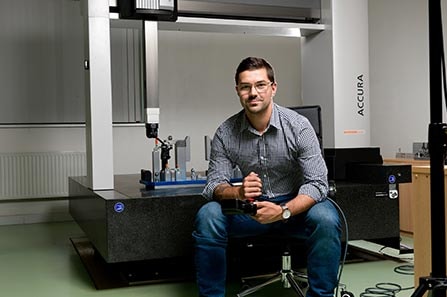
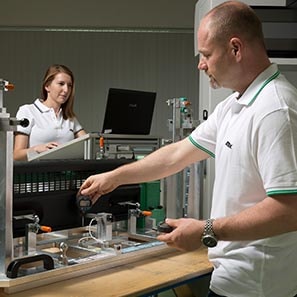
We operate our own well-equipped laboratory enabling a wide range of measurements and tests in-house, including 3D measurement on ZEISS ACCURA II 10 and specialised tests (climate tests, flammability, xenon tests, material and colour analyses).
Quality control is fully integrated into production processes through automotive-standard tools:
APQP, PPAP, FMEA, MSA, SPC, Control Plan.
Our management system is certified to:
ISO 9001, IATF 16949, ISO 14001, CQC, TISAX
and meets the highest standards of the automotive industry.
For us, production quality is inseparable from responsible business, impact management and long-term sustainability. Our approach is based on the principle that stable processes, risk prevention and environmental responsibility form one integrated management system. We calculate our carbon footprint annually and publish an ESG report.
Dispatch
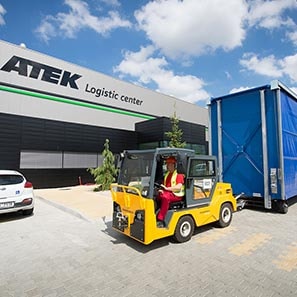
New logistics centre
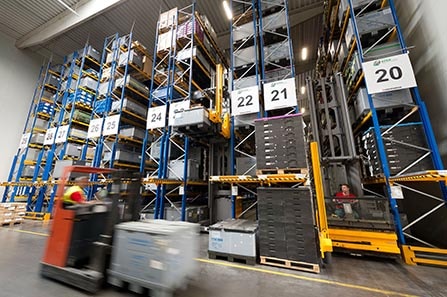
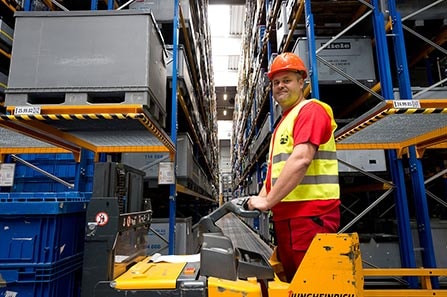
We operate a new logistics centre covering more than 6,000 m² with over 10,000 pallet positions for efficient logistics. Semi-automatically controlled system trucks allow storage up to 11 m high; their speed between racks reaches up to 8 km/h.
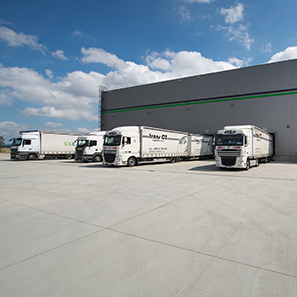
The centre can handle up to 4 trucks at once, with a single truck processed in 30–45 minutes.
The centre dispatches 40–50 trucks per day.